
Table of Contents
- Why Vintage Gym Apparel Is Taking Over in 2026
- Key Characteristics of Authentic Vintage Workout Gear
- Best Vintage Aesthetic Gym Tanks for Heavy Training
- How to Style Oversized Gym Tees Without Looking Sloppy
- Caring for Distressed Gym Apparel So It Lasts
- Sizing and Fit Conversion Guide for Vintage-Inspired Gear
- Sustainable Styling and Upcycling Your Retro Gym Wardrobe
- Conclusion
- Frequently Asked Questions
Last Updated: September 13, 2026
Why Vintage Gym Apparel Is Taking Over in 2026
Walk into any serious gym right now and you'll see it: faded black tees, ribbed tanks, stone-washed cotton that looks like it survived a decade of training. This vintage aesthetic gym apparel guide exists because that look isn't a passing trend. It's a correction. According to Google Trends data on retro fitness fashion searches, interest in vintage workout clothing has climbed steadily as lifters reject slick synthetic gear for heavyweight cotton with actual character. At Driven Fitness, we build our entire line around that shift: 260 gsm cotton, vintage washes, and cuts that hold their shape under a loaded bar. Below, we'll show you exactly how to build a retro wardrobe that performs, not just photographs well.
Key Characteristics of Authentic Vintage Workout Gear
Authentic vintage workout gear is defined by three things: natural fibers, a relaxed silhouette, and visible wear that doesn't compromise structure. Modern reproductions chase the same look, but the details separate the real thing from a costume, and the real test is how the fabric behaves once you start sweating.
Fabrics That Define the Retro Look
Heavyweight cotton leads the category. A 260 gsm (7.7 oz) fabric gives you the thick hand-feel and structured drape that thin performance blends can't replicate (convertunits.com). Ribbed cotton, terry cloth, and cotton-poly warm-up knits round out the classic palette.
How Vintage Fabrics Actually Perform in the Gym
Most guides stop at aesthetics. Here's what happens when you train in them:
- Breathability. Heavyweight cotton moves air through the weave but does not actively pull moisture off the skin. In a hot gym or during conditioning work, a 260 gsm tee will feel heavier and wetter than a modern performance blend. In a climate-controlled weight room with rest between sets, the difference is negligible.
- Moisture handling. Cotton absorbs sweat and holds it, which is why it feels clammy during sustained cardio but comfortable during low-rep, high-rest strength work. Modern polyester blends wick moisture to the surface to evaporate; cotton keeps it in the fiber until it dries.
- Durability under load. This is where vintage-style cotton wins. A heavyweight cotton tee resists abrasion from barbell knurling, chalk, and repeated washing far better than thin synthetic knits, which tend to pill and snag. The trade-off is weight and dry time.
- Thermal behavior. Cotton insulates when damp, which is an advantage for warm-up layers and pump covers between sets, and a disadvantage for high-output conditioning in heat.
Fit and Silhouette: Oversized, Ribbed, and Distressed
The vintage silhouette is loose through the chest and shoulders, with dropped armholes and a boxy hem. Ribbed tanks hug the torso differently, stretching with movement instead of clinging. Distressing, whether stone-washed or hand-faded, should sit on the surface. If the fabric tears at a seam under tension, it's decoration, not construction.
Best Vintage Aesthetic Gym Tanks for Heavy Training
The best vintage aesthetic gym tanks balance a loose cut with fabric that survives chalk, sweat, and repeated washing. Two styles dominate, and they serve different purposes.
Stringer Tanks vs. Cutoff Tanks: Which One Works Harder?
Stringer tanks have deep armholes and a narrow back panel, built for maximum airflow and shoulder visibility. Cutoff tanks, like [our Skull Cutoff Tank](https://drivenfitness.shop/products/tank-top-driven-samurai-skull-stonewash-muscle-tee), use stone-washed 100% cotton in a lighter weight for hot sessions and high-volume days. Pick the stringer for heavy compound work where you want full range of motion. Pick the cutoff for conditioning days when heat is the bigger enemy.
| Feature | Stringer Tank | Cutoff Tank |
|---|---|---|
| Fabric weight | Mid to heavy cotton | Lightweight stone-washed cotton |
| Best for | Heavy compound lifts | Conditioning, hot gyms |
| Coverage | Minimal, maximum airflow | Moderate, relaxed cut |
| Durability under load | High | Moderate |
How to Style Oversized Gym Tees Without Looking Sloppy
Styling oversized gym tees comes down to proportion: one loose element, everything else fitted. A boxy 260 gsm tee over tapered joggers or shorts reads intentional. The same tee over baggy pants reads like you slept in it.
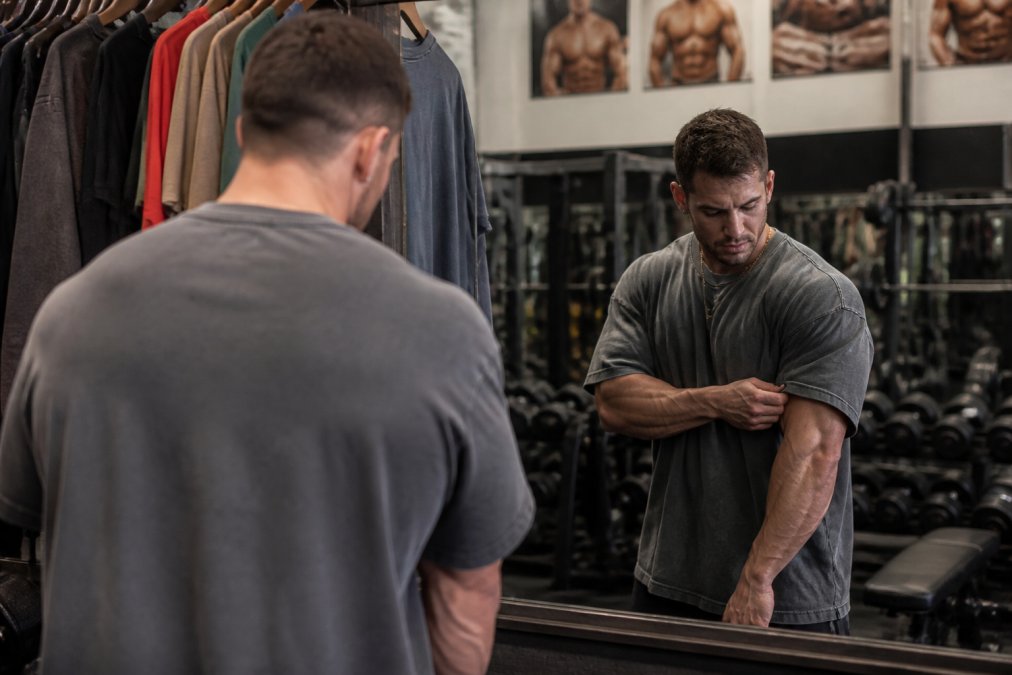
[Our Vintage Washed DF Tee](https://drivenfitness.shop/products/vintage-washed-df-tee) is cut with a dropped shoulder and boxy hem, which means it layers cleanly without bunching. Tuck the front hem slightly for a defined waistline, or leave it full-length over fitted bottoms. The mistake most people make is sizing up twice. One size above your fitted tee is enough.

Layering for Warm-Ups and Pump Covers
Layering is where retro styling earns its keep. A heavyweight tee over a ribbed tank keeps muscles warm between sets, then comes off for the working sets. That's the pump cover function, and it's why the Vintage Turtle works as both a standalone tee and an outer layer.

Caring for Distressed Gym Apparel So It Lasts
Caring for distressed gym apparel means protecting the intentional wear without accelerating it. Wash cold, inside out, and skip the dryer. Heat is what turns a controlled fade into a frayed collar.
- Turn garments inside out before washing to protect the print and surface texture
- Use cold water and a gentle cycle
- Skip fabric softener, which coats cotton fibers and dulls the wash
- Hang dry or tumble on low; high heat shrinks cotton and cracks prints
- Repair loose seams early with a simple stitch before they spread
A common mistake is treating distressed cotton like delicate fabric. Heavyweight cotton handles hard training and frequent washing, but it does not handle hot dryers. That single habit shortens the life of a good tee more than anything else.
Sizing and Fit Conversion Guide for Vintage-Inspired Gear
Sizing vintage-inspired gear is not a simple size-up-or-down decision. It requires converting from modern fitted sizing, because a retro cut runs looser by design, and because true vintage garments carry decades of sizing drift that modern reproductions try to replicate without the guesswork.
Why Vintage Sizing Is Inconsistent
Three forces make vintage sizing unreliable, and understanding them is the difference between a tee that fits and one that hangs in the closet:
- Vanity sizing drift. Over the past several decades, the numeric label on a garment has drifted smaller relative to the actual body it fits (nist.gov). A modern medium is cut closer to what a vintage large once was. This is why a thrifted 1980s large can fit like a modern medium.
- Shrinkage from repeated washing. Cotton garments that have been washed and dried hot for years can lose measurable length and width. A vintage tee labeled large may now measure closer to a modern small in the body, even if the shoulders still read large.
- Inconsistent grading across eras. Shoulder seams, armhole depth, and body length were graded differently in the 1970s, 1980s, and 1990s. A 1980s boxy cut and a 1990s relaxed cut are not the same silhouette even at the same labeled size.
How to Measure a Modern Body for a Vintage Label
Skip the size label entirely. Measure a garment you already own and like the fit of, then match those numbers to the size chart. Four measurements matter most:
| Measurement | How to Take It | Why It Matters |
|---|---|---|
| Shoulder seam to shoulder seam | Lay flat, measure across the top from seam to seam | Drives the retro silhouette more than chest width |
| Chest (pit to pit) | Lay flat, measure across one inch below the armhole, double it | Determines drape and layering room |
| Body length | From high point of shoulder to bottom hem | Vintage cuts often run shorter than modern tees |
| Sleeve opening | Lay flat, measure across the sleeve hem | Dropped armholes change how the sleeve sits |
For vintage-inspired reproductions, shoulder width is the single most predictive number. A wider shoulder seam and shorter body is what creates the boxy retro look. If your measured shoulder matches the chart, the rest usually follows.
Conversion Table: Modern Fitted to Vintage Cut
| Your Fitted Size | Vintage Cut Size | Result |
|---|---|---|
| Small | Small | Relaxed, close to classic medium |
| Medium | Medium | Boxy, true oversized look |
| Large | Large | Loose drape, room to layer |
| XL | XL | Full oversized, heavy layering |
[Our Distressed Tee](https://drivenfitness.shop/products/distressed-tee) is graded with a wider shoulder and shorter body than standard athletic cuts, which is what creates the retro silhouette. Measure a tee you already like the fit of, compare the shoulder seam to the size chart, and match that number. If you're between sizes and want a fitted look, size down.

Sustainable Styling and Upcycling Your Retro Gym Wardrobe
Sustainable styling starts with buying fewer, heavier pieces and wearing them longer. A 260 gsm cotton tee outlasts three thin synthetic shirts, which is the simplest sustainability argument in apparel.
Upcycling extends that further. Worn tees become cutoff tanks with a pair of sharp scissors and a straight line. Faded prints get a second life as warm-up layers. Thrifted cotton finds new purpose alongside modern reproductions, and the mix reads more authentic than an all-new wardrobe ever will.
Conclusion
Building a wardrobe that looks retro and survives real training is harder than it sounds, because most vintage-style gear prioritizes the look over the load. Driven Fitness builds for the other side of that trade-off: heavyweight 260 gsm cotton, vintage washed and distressed finishes, and oversized cuts that hold their structure through heavy compound lifts. Our vintage-inspired tees, tanks, and pump covers are made for athletes who refuse to quit and want gear that reflects it. Shop now and build a retro wardrobe that works as hard as you do.
Frequently Asked Questions
What defines the vintage aesthetic in modern gym apparel?
The vintage aesthetic in gym apparel centers on washed-out colors, distressed textures, and relaxed fits that recall 1970s and 1980s bodybuilding culture. Key markers include heavyweight cotton, stone-washed or snow-washed finishes, ribbed tanks, and oversized tees. Unlike modern performance fabrics that prioritize moisture-wicking shine, vintage aesthetic gym apparel leans into matte, lived-in textures that signal grit and experience. The look works because it pairs the visual language of old-school gym culture with modern durability standards.
How do I know if a vintage aesthetic gym tank is actually built for heavy lifting?
Check the fabric weight and construction. A tank made from 260 gsm (7.7 oz) cotton or heavier will hold its shape through repeated stretching and washing. Look for reinforced shoulder seams, a loose fit through the chest and arms, and a hem that does not curl. The best vintage aesthetic gym tanks use heavyweight cotton that breathes enough for intense sets while maintaining structure.
How do you style vintage-inspired gym tanks for a modern workout?
Pair a stone-washed cutoff tank with modern joggers or tapered shorts to bridge retro and current styles. Keep the bottom half fitted so the loose tank reads as intentional. For a streetwear integration look, layer an oversized tee over the tank and remove it once you warm up. Add minimal accessories like a lifting belt or wrist wraps. The goal is to let the vintage piece be the focal point while everything else stays clean and functional for training.
What are the best fabrics for achieving a retro gym look?
Heavyweight 100% cotton is the standard for retro gym apparel. It takes washes well, holds a structured drape, and develops character over time. Stone-washed and snow-washed finishes soften the fabric while keeping the weight. Modern performance fabrics can work for moisture-wicking base layers, but they rarely achieve the matte, textured look that defines the vintage aesthetic.
Where can I find authentic vintage gym clothes versus modern reproductions?
Authentic vintage pieces show up at estate sales, thrift stores, and specialty online marketplaces. Check for single-stitch construction, older brand tags, and natural fading that cannot be replicated. Modern reproductions from brands like Driven Fitness offer a practical alternative: they replicate the washed finishes and oversized cuts while using new, durable fabric. Reproductions also come in consistent sizing, which is a major advantage since true vintage sizing runs small and varies by decade.
Why are pump covers and oversized tees trending in bodybuilding?
Pump covers serve a practical purpose: they keep muscles warm between sets, which supports blood flow and reduces injury risk during heavy compound lifts. The oversized fit allows full range of motion without restricting the shoulders or chest. The trend also reflects a cultural shift toward gym apparel that works outside the gym. A snow-washed oversized tee transitions from the squat rack to the street without looking like dedicated activewear, which is why it has become a staple in gym culture.