
Table of Contents
- Why Gym Shirts Smell After Washing
- How to Remove Sweat Smell from Polyester
- Best Laundry Detergent for Gym Clothes
- How to Strip Workout Clothes
- Preventative Care to Stop Odor Before It Starts
- Machine Maintenance and Storage Tips
- Eco-Friendly Odor Solutions
- Frequently Asked Questions
Last Updated: September 27, 2026
Why Gym Shirts Smell After Washing
You've been there. You throw your gym shirt in the wash, add detergent, run a full cycle, and pull it out smelling just as bad as before. The problem isn't your washing machine or your detergent choice. The real culprit is how synthetic fibers trap sweat, bacteria, and oils in ways that standard laundry can't reach. Understanding why gym shirts smell after washing is the first step to fixing the problem permanently. Understanding why gym shirts smell after washing is the first step to fixing the problem permanently.
The issue starts at the fabric level. Most modern gym clothes use synthetic materials like polyester because they're durable, moisture-wicking, and affordable. But those same properties that make them great for workouts also make them terrible at releasing the stuff that causes odor. When you sweat during intense training, your body releases a mix of water, salt, and organic compounds. Polyester and similar synthetic fibers are hydrophobic, they repel water (Super-Hydrophobicity of Polyester Fabrics Driven by Functional Sustainable Fluorine-Free...). That means sweat doesn't wash away easily. Instead, it gets trapped inside the fabric structure, where bacteria feed on it and create the volatile organic compounds that smell.
Synthetic Fibers and Oil Absorption
Polyester and nylon are oleophilic, which means they attract and hold oils. Your skin produces sebum constantly, and when you work out, you sweat more of it onto your clothes. These body oils don't dissolve in water, so a regular wash cycle can't remove them. The oils accumulate in the fibers over time, creating a perfect breeding ground for odor-causing bacteria.
This is where most people go wrong. They think washing their gym clothes more frequently will solve the problem. It doesn't. In fact, washing too often without addressing the root cause can make things worse because standard detergents aren't designed to break down the oleophilic residue in synthetic fabrics.
Bacteria and Biofilm Buildup
Here's what happens inside your gym shirt's fibers: bacteria don't just float around randomly. They form biofilm, a sticky, organized community of microorganisms that clings to fabric fibers. Once biofilm establishes itself, it becomes nearly impossible to remove with normal washing. The bacteria inside the biofilm feed on sweat proteins and produce isovaleric acid and ammonia, which are the compounds responsible for that distinctive gym-clothes stench.
A single gym shirt can harbor millions of bacteria cells. When you sweat, you feed them. When you wash, you rinse away some of the sweat but leave the bacteria colony intact. The next time you work out, you're feeding the same bacteria again, and the odor gets worse.
The problem is compounded if your washing machine itself has bacteria buildup. Many people don't realize their washing machine is a source of contamination. If your machine has mold or bacterial growth in the drum or gasket, it's transferring those microorganisms directly onto your clean clothes.
Hard Water and Mineral Residue
Hard water is another silent killer. If you have mineral-heavy water in your area, those minerals (calcium and magnesium) bind to detergent molecules and prevent them from working properly. This means your detergent can't dissolve oils or break down sweat residue effectively. The minerals also leave a film on fabric that traps bacteria and odor compounds.
You can't always tell if you have hard water just by looking at it. But if your clothes feel stiff after washing or your detergent doesn't seem to work as well as it should, hard water is likely the culprit. Over time, mineral buildup gets worse, and your gym clothes smell more intensely.
How to Remove Sweat Smell from Polyester
Removing sweat smell from polyester requires a different approach than washing regular clothes. The goal is to strip out trapped oils, kill bacteria, and break down biofilm without damaging the fabric. Here's what actually works.
Pre-Wash Habits That Matter
Before you even put your gym shirt in the washing machine, you need to prepare it properly. Don't let sweaty clothes sit in a hamper for days. The longer they sit, the more time bacteria have to multiply and biofilm to strengthen. Rinse your gym clothes with cool water as soon as you take them off. This removes surface-level sweat and gives bacteria less to feed on before the main wash.
Turn your gym shirt inside out before washing. Most of the sweat and bacteria accumulate on the inside of the fabric, so this exposes that side directly to the detergent and agitation.
Pre-soak your gym clothes for 15-30 minutes in cool water before washing. This loosens some of the trapped sweat and oils, making them easier to remove during the main wash cycle.
Been Through Fire Snow Washed →
The Deep Clean Soak Method
The deep clean soak is the most effective way to remove persistent odor from how to strip workout clothes. Here's the process:
- Fill a bathtub or large bucket with hot water (as hot as the fabric can handle, check the care label)
- Add a specialized enzyme-based detergent or a cup of white vinegar
- Submerge your gym shirt completely and let it soak for 4-8 hours
- Agitate the water occasionally to help the detergent penetrate the fibers
- After soaking, rinse thoroughly with cool water
- Wash normally in your machine using cold water and an enzyme detergent
- Air dry completely, heat from the dryer can set odors permanently
The enzyme detergent breaks down the protein-based sweat and kills bacteria. White vinegar works differently, it kills bacteria through acidity and helps dissolve mineral buildup if you have hard water.
Best Laundry Detergent for Gym Clothes
Not all detergents are created equal when it comes to how to remove sweat smell from polyester. You need a detergent specifically designed to handle the oils and proteins in sweat.
How to Strip Workout Clothes
Laundry stripping is an intensive cleaning method that removes years of buildup from fabric. It's not something you do every wash, but it's incredibly effective for gym clothes that smell no matter what you try.
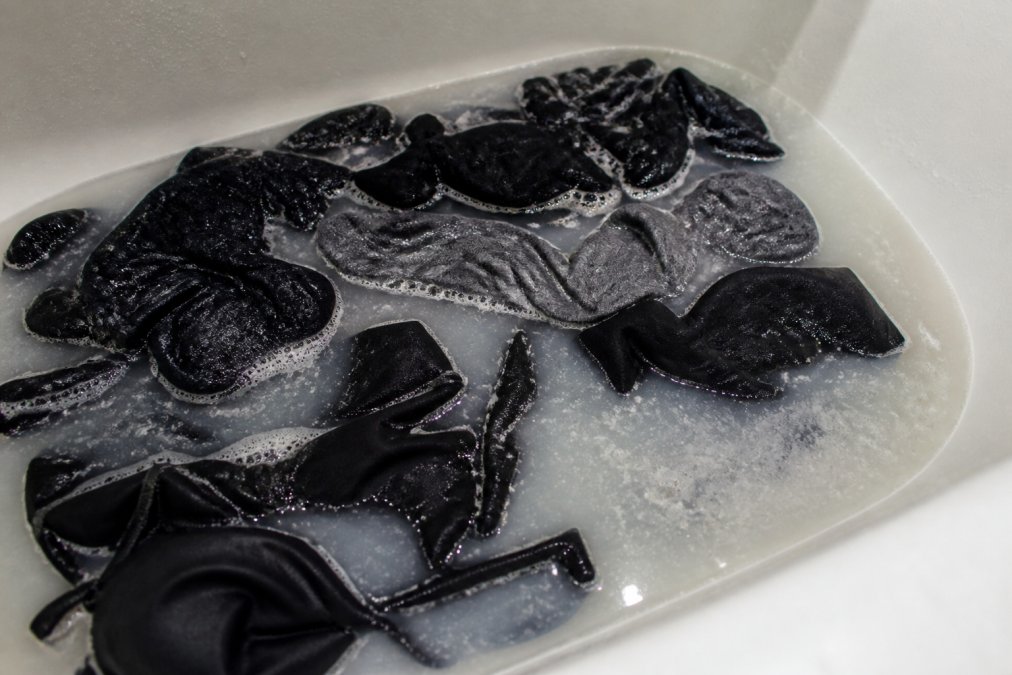
Step-by-Step Laundry Stripping Process
- Fill a bathtub with hot water (as hot as you can handle touching)
- Add one of these combinations:
- 1/2 cup borax + 1/2 cup washing soda + 1/4 cup laundry detergent, OR
- 1 cup white vinegar + 1 cup baking soda + 1/4 cup enzyme detergent
- Stir until everything dissolves
- Submerge your gym clothes completely and let them soak for 4-8 hours
- The water will turn brown or gray, this is the buildup leaving your clothes
- Drain the tub and rinse your clothes thoroughly with cool water multiple times
- Wash normally in your machine with cold water and enzyme detergent
- Air dry completely
The combination of borax, washing soda, and detergent creates a powerful cleaning solution that breaks down years of mineral buildup, soap residue, and bacterial biofilm. You'll be shocked at how dirty the water gets.
What to Avoid During Stripping
Don't strip your clothes more than once every 6 months. Stripping is aggressive and can wear down fabric if overdone. It's a deep clean, not a regular maintenance wash.
Preventative Care to Stop Odor Before It Starts
Once you've deep-cleaned your gym clothes, the real work is preventing the problem from coming back. Prevention is easier than remediation.
Machine Maintenance and Storage Tips
Your washing machine is only as clean as its components. If your machine has mold or bacterial growth, it's contaminating every load of laundry you wash.
Eco-Friendly Odor Solutions
If you prefer to avoid harsh chemicals, several natural alternatives work well for gym clothes.
| Odor Solution | Best For | Time Required | Effectiveness |
|---|---|---|---|
| Enzyme detergent wash | Regular maintenance | 30 minutes | Moderate |
| Deep clean soak | Persistent odor | 4-8 hours | High |
| Laundry stripping | Years of buildup | 4-8 hours | Very High |
| White vinegar rinse | Hard water areas | 30 minutes | Moderate |
| Sun-drying | Natural disinfection | 2-4 hours | Moderate |
Frequently Asked Questions
Why do polyester gym clothes smell even after washing?
Polyester is hydrophobic and oleophilic, meaning it repels water but attracts oils and sweat. Sebum and body oils cling to synthetic fibers and don't rinse away with standard detergent. Bacteria colonize these trapped oils and produce volatile organic compounds like isovaleric acid and ammonia, creating persistent odor. Standard wash cycles don't generate enough agitation or heat to break down this buildup, so the smell returns as soon as you sweat again.
Does fabric softener make gym clothes smell worse?
Yes. Fabric softener creates a waxy coating that seals in bacteria and prevents moisture-wicking. This traps sweat and accelerates odor retention. Skip fabric softener entirely on gym apparel. If you've been using it, laundry stripping will help remove the residue.
Can bacteria survive the washing machine on gym clothes?
Yes. Bacteria survive because standard detergents don't target biofilm, the protective layer bacteria form on fibers. Heat and enzymatic detergents help kill bacteria, but if oils trap bacteria inside the fabric, they can survive the rinse cycle. This is why deep cleaning with laundry stripping and enzymatic detergents designed for protein breakdown is more effective than a single hot wash.
Is it better to wash gym clothes in hot or cold water?
Hot water is more effective at breaking down sebum and killing bacteria, but it can degrade synthetic fabrics over time. A warm wash (around 120°F) with an enzymatic detergent offers a balance: it activates the enzymes that break down protein and sweat residue without excessive heat damage. For cotton gear like Driven Fitness apparel, warm water paired with proper detergent choice matters more than temperature alone.