
Table of Contents
- What Makes Gym Apparel Durable
- Synthetic vs Natural Fibers for Gym Wear
- Best Gym Shirts for 2026 Training
- How to Wash Workout Clothes to Last Longer
- Evaluating Durability Before You Buy
- Cost-Per-Wear Analysis for Gym Apparel
- Frequently Asked Questions
Last Updated: September 26, 2026
What Makes Gym Apparel Durable
Durability in gym apparel comes down to three core factors: fabric construction, material composition, and how well the garment handles repeated stress. The real difference between apparel that lasts and apparel that doesn't sits in the details most shoppers never examine.
Fabric Weight and Density
Fabric weight, measured in grams per square meter (gsm), directly correlates with durability and longevity. A 260 gsm cotton tee will outlast a 150 gsm tee by a significant margin under identical washing and wearing conditions.
A tightly woven fabric resists pilling, stretching, and tearing far better than loosely constructed material. When held to light, quality gym apparel shows minimal gaps between threads.
The sweet spot for durability in cotton-based gym wear sits between 240-280 gsm.
Seam Construction and Reinforcement
Seams fail long before fabric does. Most cheap gym apparel uses single-needle construction, which creates a single line of stitching that bears all the stress during heavy compound lifts. Single-needle seams give way.
Flatlock seams and double-needle construction distribute stress across multiple thread lines, improving durability at high-stress points: armholes, shoulder seams, and side panels.
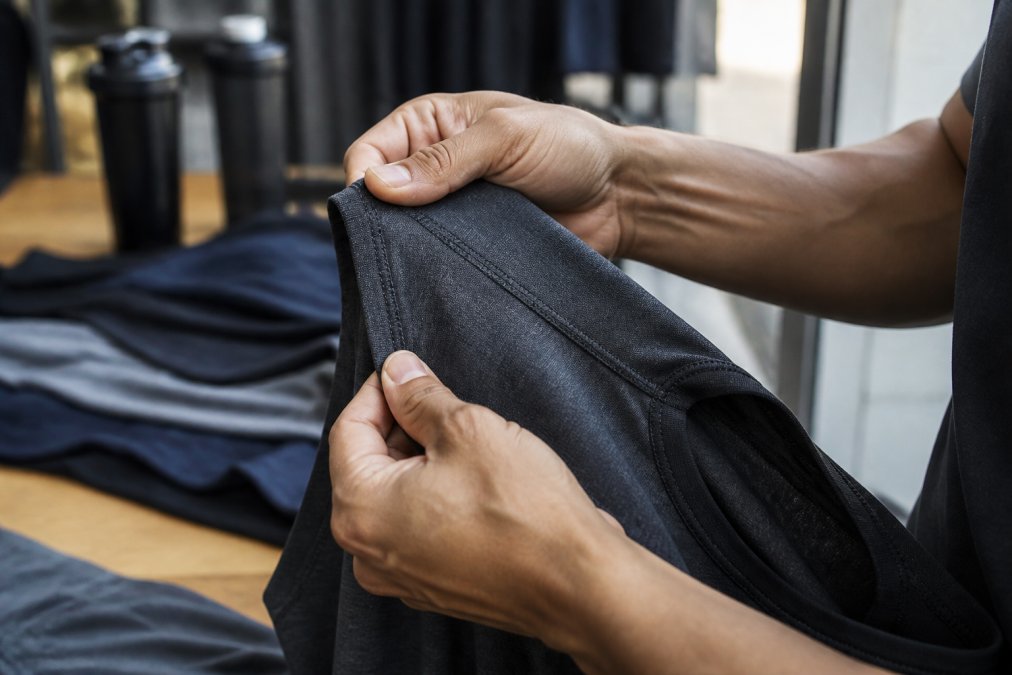
Check seams before purchasing. Flip the garment inside out and inspect the stitching pattern. Uneven stitching, loose threads, or gaps between stitches indicate poor construction. Quality seams appear tight, consistent, and symmetrical on both sides of the fabric.
Synthetic vs Natural Fibers for Gym Wear
Your fiber choice depends on your training style, sweat profile, and how you care for your gear.
Cotton and Organic Cotton
Cotton remains popular for gym apparel because it offers comfort, breathability, and proven durability. It absorbs moisture effectively but doesn't dry quickly, making it ideal for lifters prioritizing comfort over moisture management.
Organic and conventional cotton perform identically for durability once woven into fabric. The distinction matters more for environmental values than garment longevity.
Cotton's weakness emerges in high-sweat environments. Pure cotton stays damp longer than synthetics, creating conditions where odor-causing bacteria thrive and moisture accelerates fiber breakdown.
Polyester, Nylon, and Spandex Blends
Synthetic fibers excel at moisture management and quick-drying performance. Polyester wicks sweat away from skin, nylon adds tensile strength, and spandex (2-5%) provides stretch and recovery.
Synthetic blends pill more readily than pure cotton and retain odors more stubbornly because sweat sits on the surface rather than being absorbed.
For gym apparel specifically, a blend works better than pure synthetics. A 95% polyester / 5% spandex mix gives you moisture-wicking and stretch without the odor retention issues of 100% synthetic fabric. Adding even 20-30% cotton to a synthetic blend improves odor control and comfort while maintaining performance benefits.
Moisture-Wicking and Breathability Trade-offs
Breathability allows air and heat to escape; moisture-wicking moves sweat away from skin. Tightly woven, heavy fabric wicks effectively but breathes poorly. Loosely woven, light fabric breathes well but wicks poorly.
For gym work, wicking matters more than breathability. A moderately breathable, high-wicking fabric outperforms a highly breathable, low-wicking one.
Cotton-dominant blends (70-80% cotton with 20-30% polyester) balance both properties reasonably well. They breathe better than pure synthetics while wicking faster than pure cotton. This is why many serious lifters choose cotton-blend gym apparel over pure cotton or pure synthetics.
Best Gym Shirts for 2026 Training
The market for gym apparel has fragmented into distinct categories based on fit, aesthetic, and performance priorities. Understanding which category matches your training style and body type matters more than chasing brand names.
Heavy-Weight Cotton Tees for Structure
Heavy-weight cotton tees (240-280 gsm) provide structure and support that lighter fabrics simply cannot deliver. When you're wearing a pump cover between sets, you want fabric that holds its shape and provides compression without feeling restrictive. Heavy-weight cotton does this naturally.
The Vintage Washed DF Tee from Driven Fitness exemplifies this category. At 260 gsm with 100% cotton construction, it delivers the structural integrity needed for serious lifting.

Heavy-weight tees work best for lifters who prioritize durability and structure over lightweight comfort. If you're doing primarily strength work with longer rest periods, the extra fabric weight becomes an advantage rather than a drawback. The downside: these shirts can feel restrictive during high-rep metabolic work or when layered under other clothing.
Vintage-Inspired and Distressed Designs
Vintage-washed and distressed gym apparel has become the dominant aesthetic among serious lifters. The aesthetic signals commitment to a lifestyle beyond casual gym attendance. But here's the critical question: does the distressed look compromise durability?
The answer depends entirely on construction quality. A distressed tee made from 250 gsm cotton with reinforced seams will outlast a standard tee made from 150 gsm fabric, even though the distressed version looks deliberately worn. The distressing is a surface treatment applied during manufacturing, not a structural weakness.
Driven Fitness's Been Through Fire Snow Washed uses 250 gsm cotton with slight elasticity built into the blend. The distressed aesthetic comes from the washing and treatment process, not from inferior construction.
The key: buy distressed apparel from brands that use heavy-weight base fabrics. Distressing a cheap, lightweight tee just accelerates its degradation. Distressing quality fabric creates a garment that looks intentionally worn while maintaining performance characteristics.
How to Wash Workout Clothes to Last Longer
You can buy the most durable gym apparel available, then destroy it through improper washing. Most people wash gym clothes like they wash everyday casual wear, which is the fastest way to accelerate degradation.
Proper Washing Techniques and Water Temperature
Turn your gym apparel inside out before washing. This simple step protects the outer surface from abrasion against other garments and the washing machine drum. The inside of the fabric experiences less visible wear, which extends the garment's aesthetic lifespan.
Use cold water, not hot. Hot water accelerates fiber breakdown and causes colors to fade faster. Cold water cleans effectively while preserving fabric integrity. Wash gym apparel separately from other clothing when possible, mixing gym wear with heavier items like jeans increases abrasion and stress on seams.
Select a gentle or delicate cycle. Heavy-duty washing cycles subject fabric to excessive agitation, which stresses seams and accelerates pilling. Gym apparel doesn't need aggressive cleaning, a gentle cycle removes sweat and bacteria effectively while minimizing wear.
Detergent choice matters more than most people realize. Standard detergents contain enzymes and chemicals that break down fabric fibers over time. Sports-specific detergents or mild detergents designed for athletic wear preserve fabric structure better. Avoid fabric softeners entirely, they coat fibers and accelerate pilling.
Drying and Storage Methods
Never use a dryer for premium gym apparel. High heat damages synthetic fibers and causes cotton to shrink. Hang-dry your gym clothes whenever possible. This preserves fabric structure and extends garment life by years compared to machine drying.
If you must use a dryer, use low heat and remove the garment while still slightly damp. The combination of heat and tumbling action accelerates fiber breakdown and pilling.
Storage matters equally. Fold gym apparel and store it in a cool, dry location. Humidity promotes mildew growth and bacterial colonization, which creates odors that become permanent even after washing. If you notice musty smells, wash immediately in cold water with a sports detergent, then hang-dry completely before storing.
Inspect stored apparel periodically. If you notice pilling or loose seams, address them immediately. A loose seam can be reinforced with a few stitches before it becomes a major failure. Pilling can be removed with a fabric shaver, which extends the garment's visual lifespan.
Evaluating Durability Before You Buy
Most people make durability decisions based on brand reputation or price point. Neither factor reliably predicts how long a garment will actually last. You need to evaluate construction quality directly.
Checking Fabric Quality and Thickness
Hold the garment up to light and look for gaps between threads. Tightly woven fabric blocks light. Loosely woven fabric lets light pass through easily. If you can see through the fabric when held to light, durability will suffer.
Feel the fabric's weight and density. Run your hand across the surface and assess the texture. Quality gym apparel feels substantial and slightly textured. Cheap apparel feels thin and slick. This tactile assessment takes seconds but predicts durability more accurately than any marketing claim.
Check the fabric weight specification if available. Anything under 200 gsm will likely disappoint. 200-240 gsm offers decent durability. 240+ gsm delivers premium durability for gym use. Driven Fitness's product line uses 250-260 gsm cotton.
Assessing Fit and Construction Details
Examine seams closely. Turn the garment inside out and inspect stitching patterns. Uneven stitching, loose threads, or visible gaps indicate poor construction. Quality seams appear tight, consistent, and symmetrical.
Check reinforced stress points.
Cost-Per-Wear Analysis for Gym Apparel
Price alone tells you nothing about value. A $20 shirt that lasts three months costs more per wear than a $50 shirt that lasts two years.
Frequently Asked Questions
What material is best for gym clothes to ensure longevity?
Heavy-weight cotton (260+ gsm) offers durability and structure for intense lifting, while polyester blends provide moisture-wicking and stretch recovery. Flatlock seams and reinforced stress points extend garment life significantly across both material types.
How can you tell if gym apparel is high quality?
Examine fabric weight (aim for 250+ gsm for durability), check seam construction for flatlock or reinforced stitching, and verify material composition on the label. Look for consistent stitching, minimal pilling after wear, and breathability that doesn't sacrifice durability.
How should you care for gym apparel to keep it durable?
Wash in cold water on a gentle cycle to prevent fiber breakdown, turn garments inside out to reduce pilling, and skip the dryer when possible, air dry to extend fabric life. Avoid fabric softeners, which degrade moisture-wicking properties. Store in a cool, dry place away from direct sunlight. Proper care routines are important for durability maintenance.
Does fabric composition affect the lifespan of gym shirts?
Yes significantly. Pure cotton (100%) is durable for heavy lifting but absorbs sweat and takes longer to dry. Synthetic blends resist pilling better and dry faster. Spandex adds stretch and recovery but degrades faster than base fibers, quality matters more than composition alone.